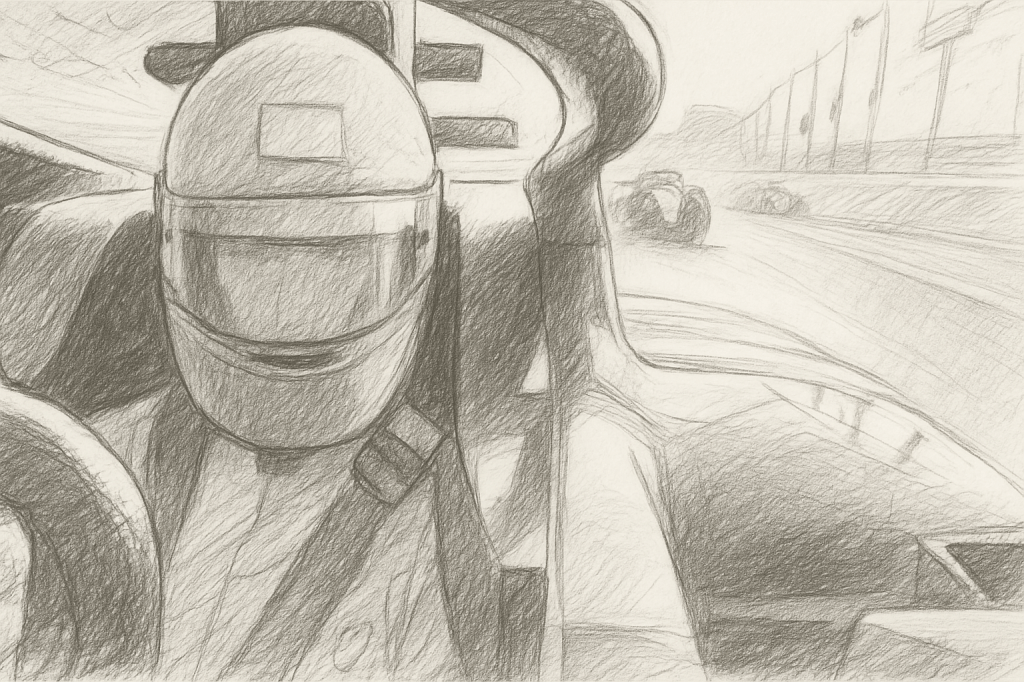
Spoiler alert: This is not an F1 movie review. These are just some afterthoughts that refused to stay quiet in my head after watching it. Yes, there are spoilers ahead.
Some movies feel like they were made without much thought — hard to sit through, harder to remember. And then there are movies like the F1 movie. Engaging, enthralling, inspiring. They keep you on the edge of your seat. Time just disappears.
But the best part? These movies don’t end when the credits roll. They continue. In your head. They leave you with threads to tug on, layers to unravel. These are the kinds of films you want to revisit. Again and again. Because each time, a new layer reveals itself.
F1 is one such movie.
Sure, the races and the adrenaline-packed storyline give you a rush. But beneath all that, there are quieter, deeper stories. The one that stayed with me the most was Brad Pitt’s character. Here are a few reflections that stood out to me:
This post is my meditation — into the dots my mind connected between the movie and the various other forms of media I consumed in the days that followed. That’s all.
Here are a few reflections that stood out to me:
• Cut the Noise
There are two protagonists in the movie: one is young and brash; the other (Brad Pitt) is wise and weathered — the Master Shifu to the Kung Fu Panda.
How do you make an F1 driver not seem brash or impulsive? By giving him a bias toward action.
When his character is introduced, questions swirl around him. But he doesn’t flinch. He has his own methods. He walks the talk. And slowly but surely, the younger driver learns to quiet the noise and follow his lead.
This idea — of teaching not by preaching but by being — reminded me of a course I’m currently taking at The Six Percent Club, a masterclass by Amit Varma (from The Seen and the Unseen podcast). He speaks of the same principle: clear action, done well, silences doubt.
• Perseverance over Passion
Brad Pitt’s character shows what it truly means to pursue passion.
On the outside, he carries a don’t-care cowboy vibe. But under the surface? He’s focused. Disciplined. Relentless.
A recent Hidden Brain episode called “The Passion Pill” explores this idea beautifully. Host Shankar Vedantam talks about how passion isn’t about a constant high — it’s about returning to the work again and again for the rare moments of flow. Those unpredictable, shimmering seconds when everything clicks.
I felt the same thing watching a 38-year-old Djokovic at Wimbledon, outplaying 20-somethings. That’s not just passion. That’s years of grind. Of choosing to show up, even when the fire flickers.
• The Ending (or the Beginning?)
The ending feels both happy and sad — which is probably why it’s so good.
Brad Pitt’s character finally gets his “flying” moment. And that’s when he decides to let go. End his F1 career on a high. Step into the next unknown.
There’s something incredibly raw about that decision. He’s not escaping. He’s just… done. Fulfilled. Unshackled. He lives a life true to itself — and it’s moving to watch.
It reminded me of this brilliant piece on living an intellectually rich life. Some endings aren’t closures — they’re transitions.
• Slow is Smooth. Smooth is Fast.
This mantra stood out to me — not just as a line, but as a mindset.
There’s a pit stop scene where a woman fumbles during a tire change. Tension builds. Time stretches. But instead of panic, Brad Pitt reminds her: slow is smooth, smooth is fast.
When we try too hard, the body tightens. System 1 — as described in Daniel Kahneman’s Thinking, Fast and Slow — kicks in. Things slip. Coordination breaks.
I felt this deeply when I started learning tennis two years ago. I used to overthink every shot. Until I read The Inner Game of Tennis by W. Timothy Gallwey. That book rewired the way I play. Less control, more trust. Less noise, more flow.
But the thoughts don’t stop there. They ripple out.
I found myself thinking about long-form content. Everyone keeps saying it’s dying. But I don’t buy it. Long-form isn’t dead. It’s alive, breathing fire, and kicking TikTok’s a**.
Proof? This brilliant article: Audiences Prove That the Experts Are Wrong.
Maybe what’s broken isn’t the form — it’s the quality. Maybe we just need better long-form, the kind that makes you pause and think. The kind that lingers.
More on that in part 2 of this post.
P.S. I love how Apple rode the Drive to Survive hype (you’ll spot so many familiar faces from the show) and turned it into something remarkable. They didn’t just borrow the energy — they built a masterpiece out of it.
This movie belongs in the history books.
 VBlog
VBlog 
Leave a comment