Data Scientist by the week-day. Aspiring Story teller. Full time dad of a toddler.
This blog is where I slow things down and ask questions — about life, parenting, health, focus, freedom, and the stuff we usually don’t pause to think about. Sometimes I find answers. Mostly, I just enjoy the process.
If you’re into thoughtful detours, curious deep-dives, and the occasional dad-level insight — welcome.
Thesis: it’s the animal within us that makes us human. Recent advancements in AI give us power — but it’s doesn’t replace what makes us us
Machines conquered Chess.. but not Humans
It’s 1997. Garry Kasparov (the current world champion and arguably the greatest of all time 🐐) is shocked by his opponent. Not by its moves, but the fact that it’s able to play with uncanny consistency and resilience. There are no signs of tiredness, no “mind-games”, just pure chess. Gary not only lost the match but also the hope for the future of chess. He and many others imagined that the game of chess has been conquered by machines. And that it will never be the same again.
Fast forward to 2025, a nineteen year old boy from India, named D. Gukesh, just won the world championship. Chess did not die in 1997. Twenty eight years later, it’s one of the most popular games in the world. Machines now play chess far better than humans, and you don’t need a room size computer to beat the best human chess player in the world.
No chess story in 2025 is complete without mentioning the modern GOAT, the one and only, Magnus Carlsen. The rise of Magnus to the top of chess is nothing short of extraordinary. Coming from Norway (a country known for cold weather not Chess!) it was surprising how Magnus rose to the top so quickly. At 35 years old, there is hardly anyone who comes close to beating him.
“Magnus has an incredible innate sense. … The majority of ideas occur to him absolutely naturally. He’s also very flexible, he knows all the structures and he can play almost any position.”
-Vishy Anand
Magnus can play any chess opening; making it harder for opponents to prepare against him. He especially does well in shorter time controls where intuition and game understanding plays a larger role. While chess engines and online chess have made the game accessible to a larger audience, at the top level, access to AI does not make the difference. It’s the coaches, hard work and ultimately some innate talent that seems to win. Magnus may not be the best player when playing against the machines, but he does incredibly well when playing against other humans.
So, what makes us Human?
It’s the raw animal ability to experience and learn from it. Or as Buddhism teaches, the ability to suffer.
You can only truly empathize with someone if you have gone through the suffering yourself. A simple example: would you learn how to swim from a coach who doesn’t know how to swim? Will AI be able to impart swim lessons as effectively as a human? Each time a human learns to swim, they have to suffer a little.
Whether it’s creativity, empathy, or any other quality that makes us human – they are all backed by experience. What AI has learnt from is the language, not experience. I recently read Siddhartha by Hermen Hesse. And there this point in the book where Siddhartha justifies to his friend on why does he disagree with Buddha:
“Words do not express thoughts very well. They always become a little different immediately they are expressed, a little distorted, a little foolish. And yet it also pleases me and seems right that what is of value and wisdom to one man seems nonsense to another”
Siddhartha is talking about his disagreement on feeling of love between himself and Buddha.
My point – LLMs have mastered our words and outplayed our thinking brain. But what we feel will always escape language.
Hence, it’s not what AI is able to do but rather what it’s making us do that is more concerning. I think of LLMs as just another tool that has made humans more powerful. But underneath, the technology is diluting what we feel by hijacking our mind while we eat, sleep, love, travel, talk, poop. And now with LLMs, it has hijacked our creative process.
If we can preserve this that is core to being human, AI can never replace us. A good Hindi idiom that holds true for monkeys and now for AI:
“Bandar (AI) Kya Jaane Adrak ka Swaad” 🐒😋
Maybe that’s the next question — not what AI can do, but what it’s slowly untraining in us. I’ll explore that in Part II.
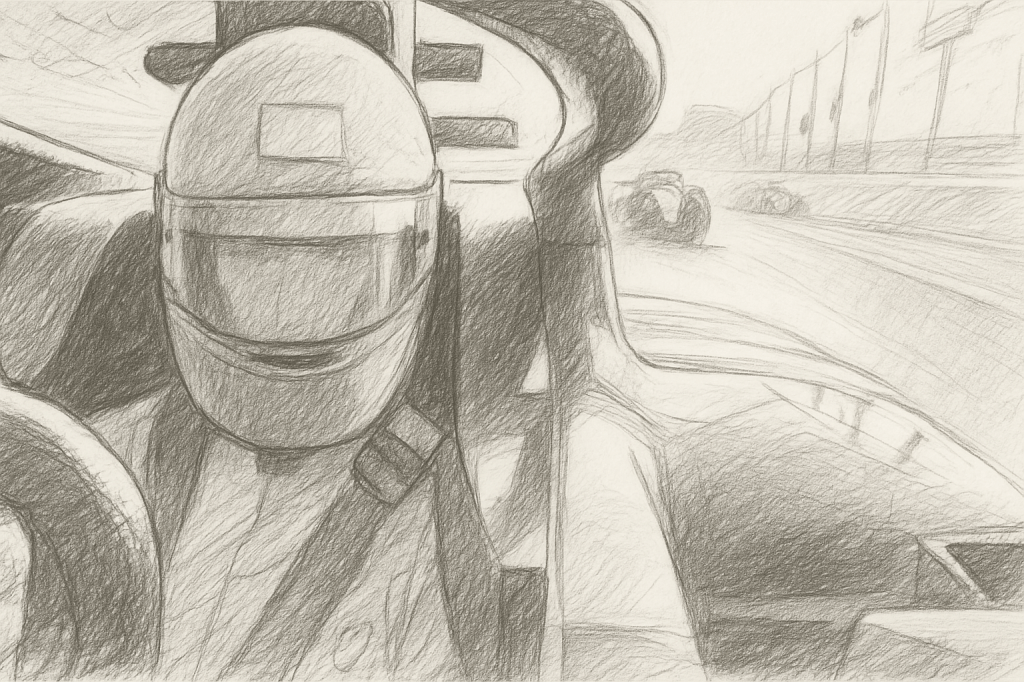
Spoiler alert: This is not an F1 movie review. These are just some afterthoughts that refused to stay quiet in my head after watching it. Yes, there are spoilers ahead.
Some movies feel like they were made without much thought — hard to sit through, harder to remember. And then there are movies like the F1 movie. Engaging, enthralling, inspiring. They keep you on the edge of your seat. Time just disappears.
But the best part? These movies don’t end when the credits roll. They continue. In your head. They leave you with threads to tug on, layers to unravel. These are the kinds of films you want to revisit. Again and again. Because each time, a new layer reveals itself.
F1 is one such movie.
Sure, the races and the adrenaline-packed storyline give you a rush. But beneath all that, there are quieter, deeper stories. The one that stayed with me the most was Brad Pitt’s character. Here are a few reflections that stood out to me:
This post is my meditation — into the dots my mind connected between the movie and the various other forms of media I consumed in the days that followed. That’s all.
Here are a few reflections that stood out to me:
• Cut the Noise
There are two protagonists in the movie: one is young and brash; the other (Brad Pitt) is wise and weathered — the Master Shifu to the Kung Fu Panda. How do you make an F1 driver not seem brash or impulsive? By giving him a bias toward action.
When his character is introduced, questions swirl around him. But he doesn’t flinch. He has his own methods. He walks the talk. And slowly but surely, the younger driver learns to quiet the noise and follow his lead.
This idea — of teaching not by preaching but by being — reminded me of a course I’m currently taking at The Six Percent Club, a masterclass by Amit Varma (from The Seen and the Unseen podcast). He speaks of the same principle: clear action, done well, silences doubt.
• Perseverance over Passion
Brad Pitt’s character shows what it truly means to pursue passion. On the outside, he carries a don’t-care cowboy vibe. But under the surface? He’s focused. Disciplined. Relentless.
A recent Hidden Brain episode called “The Passion Pill” explores this idea beautifully. Host Shankar Vedantam talks about how passion isn’t about a constant high — it’s about returning to the work again and again for the rare moments of flow. Those unpredictable, shimmering seconds when everything clicks.
I felt the same thing watching a 38-year-old Djokovic at Wimbledon, outplaying 20-somethings. That’s not just passion. That’s years of grind. Of choosing to show up, even when the fire flickers.
• The Ending (or the Beginning?)
The ending feels both happy and sad — which is probably why it’s so good.
Brad Pitt’s character finally gets his “flying” moment. And that’s when he decides to let go. End his F1 career on a high. Step into the next unknown.
There’s something incredibly raw about that decision. He’s not escaping. He’s just… done. Fulfilled. Unshackled. He lives a life true to itself — and it’s moving to watch.
It reminded me of this brilliant piece on living an intellectually rich life. Some endings aren’t closures — they’re transitions.
• Slow is Smooth. Smooth is Fast.
This mantra stood out to me — not just as a line, but as a mindset.
There’s a pit stop scene where a woman fumbles during a tire change. Tension builds. Time stretches. But instead of panic, Brad Pitt reminds her: slow is smooth, smooth is fast.
When we try too hard, the body tightens. System 1 — as described in Daniel Kahneman’s Thinking, Fast and Slow — kicks in. Things slip. Coordination breaks.
I felt this deeply when I started learning tennis two years ago. I used to overthink every shot. Until I read The Inner Game of Tennis by W. Timothy Gallwey. That book rewired the way I play. Less control, more trust. Less noise, more flow.
But the thoughts don’t stop there. They ripple out.
I found myself thinking about long-form content. Everyone keeps saying it’s dying. But I don’t buy it. Long-form isn’t dead. It’s alive, breathing fire, and kicking TikTok’s a**.
Maybe what’s broken isn’t the form — it’s the quality. Maybe we just need better long-form, the kind that makes you pause and think. The kind that lingers.
More on that in part 2 of this post.
P.S. I love how Apple rode the Drive to Survive hype (you’ll spot so many familiar faces from the show) and turned it into something remarkable. They didn’t just borrow the energy — they built a masterpiece out of it.
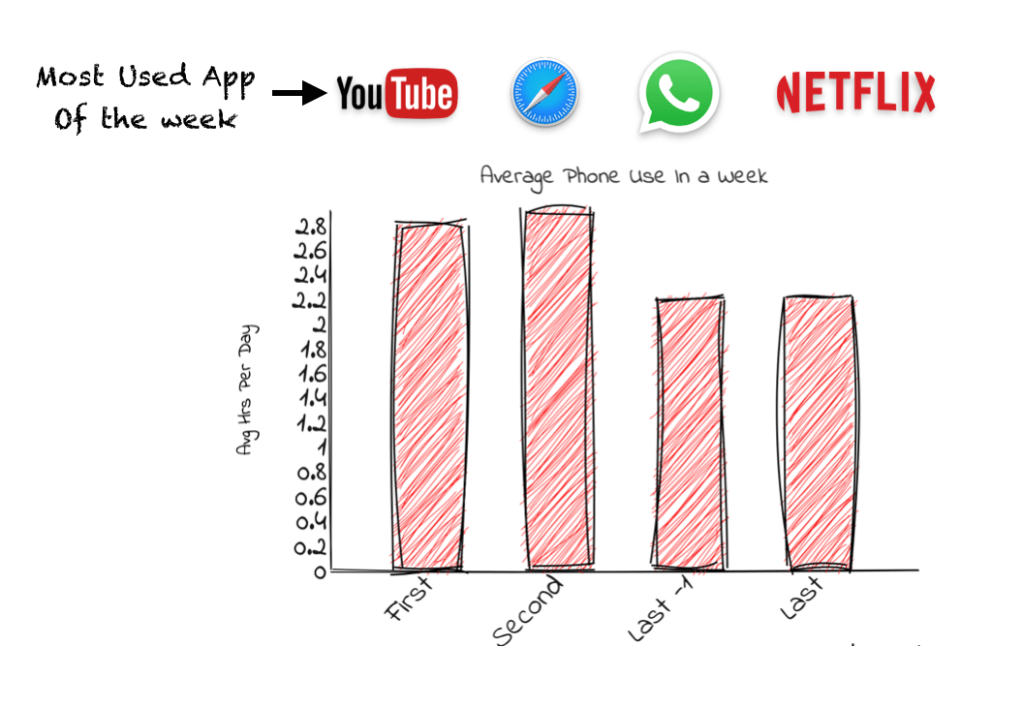
We often measure screen time in terms of productivity—but what if it’s also a mirror for our mental well-being? Last quarter, I started tracking my device usage to find out.
iPhone: Small Wins My daily phone use dropped from 2.8 hours/day in Week 1 to 2.2 hours by the last week. (See chart below.) Even a 30-minute reduction felt significant—less mindless scrolling meant more time for reading and offline hobbies.
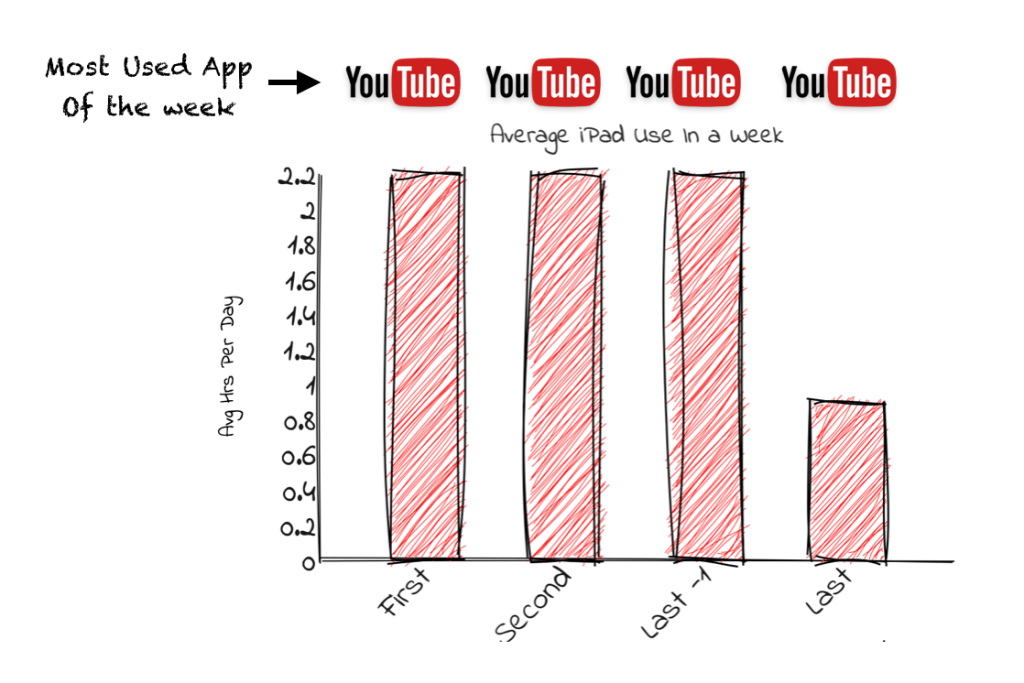
iPad: The YouTube Trap My iPad told a different story: a steady 2.2 hours/day, mostly on YouTube. The exception? A sudden drop to 0.9 hours in the final week (more on that later).
These stats don’t reveal any deep insights. I will have to dig deeper into this.
Next Steps: I’ll analyze two key windows next:
12am–6am (Does late-night scrolling disrupt my sleep?)
12pm–6pm (Is afternoon procrastination tied to low energy?).
“Every microsecond of wasted compute mattered. We realized tha tif we optimized just 1%, we could cut millions in cost” – Luo Fuli, Chief Architect at Deepseek
When ChatGpt was launched in December 2022, it was supposed to be the disruption of the tech oligopoly that never happened. Why? Because rather than disruption the big tech, it became “big tech”. The GPT-4 costed more than hundred million dollars. The deepseek r1 is different for exactly that reason: it costed a mere six million dollars to train (and also for being more open than “open”AI). In this post, I will go into the details of why I think so. This is going be a fairly technical one.
How did DeepSeek achieve such feat
They pulled of a series of data, software and hardware sleight of hands to significantly cut down their costs. Rather than doing incremental updates, they made some foundational changes that reaped them the benefits. Let’s look at each of the three in detail.
Software/Model
IMO, this is the most important category. Let’s look at different innovations:
Their use of MoE (Mixture of Experts) helped them to be much more leaner with their GPU usage. I think it is also much closer to a representation of human brain. It gave them the results similar to OpenAI’s o1 without going the agentic route.
Another key modification is Sparse Attention. It reduces the complexity by allowing each word to attend to only a subset of other words, as if skimming a book rather than reading it cover-to-cover. The computational complexity improves from O(n2) to O(nlogn) or even better.
Dynamic Precision Scaling was the other key improvement. The precision here refers to the number of bits used to represent the numbers in the model. Their idea is to compute the precision on the fly based on the needs of the task. Eg. during the traing, they might use FP16 for most operations but switch to FP32for gradient updates. It’s like changing the gears while driving a car based on the terrain.
Hardware
They were forced to innovate because of the export controls on the high-end Nvidia GPUs imposed by the US Govt. They relied on the sub-par PCIe based A100 GPUs instead of the SXM versions. Scarcity is indeed the mother of innovation!
PCIe A100 GPUs: Using “sub-par” PCIe-based chips (instead of premium SXM versions), they optimized for cost. Think of it as building a racecar with economy parts—and still winning the race.
2-Layer Fat-Tree Network: A streamlined “data highway” that reduced networking costs by 40%. Traditional setups resemble congested city roads; DeepSeek’s design acts like an express lane.
HFReduce Library: Replaced Nvidia’s NCCL with a custom tool tailored for their hardware. Result? 35% faster data transfer between GPUs.
Data
DeepSeek’s data optimizations are the unsung heroes:
Deduplication: By removing repetitive data (e.g., trimming 1,000 near-identical cat images to 100), they cut training time by 30%. Google’s 2022 study showed similar gains—but scaling this is no small feat.
Adaptive Data Remixing: Like a chef adjusting ingredients, DeepSeek rebalances datasets mid-training to focus on underrepresented topics, boosting model accuracy.
Custom Tokenizer: Their in-house tool converts text into AI-digestible chunks 20% more efficiently than off-the-shelf alternatives.
All these techniques complement each other, converging into a fast but sleek model. Their latest model (deekseek-v3) activates just 5% of the network at any time.
DeepSeek vs. The Giants: A Speculative Comparison
Metric
GPT-4 (OpenAI)
DeepSeek-v3
Training Cost
$120M
$6M
GPU Efficiency (TFLOPS)
45%
82%
Activation Rate
100%
5% (MoE)
The Team: Underdogs With A Mission
A look into their team truly feels disruptive (like the old Google or Apple disrupting their markets)
Liang Wenfeng (Founder, 39):
He founded the hedge fund High-Flyer in 2015. In 2021, he stockpiled 10,000 A100 chips—a $200M bet that now powers DeepSeek’s rise.
Luo Fuli (Chief Architect, 29):
The grew up poor in the countryside of Sichuan, went to an average university in Beijing. Her journey mirrors Steve Jobs’ “think different” ethos.
So, what’s next?
The implications of DeepSeek’s $6M breakthrough are seismic. While their model has answered millions of questions for users worldwide, it’s also cracked open a Pandora’s box of questions about the future of AI:
Is this the end of Nvidia’s bull run?
What could be the impact of “cheap” AI on bad actors?
Will this trigger an entry of other countries into AI race?
What about even smaller startups?
One thing is certain: The era of “bigger is better” AI is over. Companies building humongous data centers are chasing diminishing returns. This shift could also mean a much lower environmental impact for AI—a silver lining in an industry often criticized for its carbon footprint. I hope they are taking notes!
What do you think about the questions that DeepSeek raises? Do leave a comment with your thoughts.
Last year, staying fit wasn’t my biggest focus. A lot changed—a new baby, new routines, and things that felt out of my control. Even though it wasn’t a perfect year, I learned a lot about how important fitness is, not just for my body but also for my mind.
Looking Back ⛳
I’m proud of what I have accomplished over the years:
Finished two triathlons
Biked up a mountain—11,000 feet of climbing and 200 km in 12 hours
Held a 25-second handstand
These achievements taught me that fitness isn’t just about being strong or fast. It’s also about balance—feeling good in my body and my mind. Some days, I worked out hard but felt too tired to focus at work. Other times, I wasted time online because I couldn’t concentrate. These moments reminded me that fitness is about more than exercise; it’s about how I feel every day.
My Fitness Goals for This Year ⚡
This year, I want to build a fitness routine that fits my life as a parent, a worker, and a person. Here’s what I’m focusing on:
How I Feel Right Now: My body feels pretty good, and I’ve been sleeping well. But I want to improve my stamina and get better at staying focused at work.
My Environment: Where I live and work affects my goals. Triathlons are harder to plan here in India, so I’m setting goals around calisthenics and tennis instead. At work, I want to make a big impact while also growing personally and helping my team grow. Improving my efficiency is a big part of that.
Think for the Future:
Stay Strong Long-Term: I want a body that’s healthy for years to come. I also want the freedom to enjoy treats once in a while (check out my blog on what it means to live more fully and freely).
Build Expertise: Learn skills and create routines that let me work from anywhere, balancing personal and professional goals.
Goals in 2025
Physical Fitness Goals
Tennis: Improve skills through consistent practice and measurable milestones.
Join a tennis club or find a coach.
Compete in at least one local amateur tennis tournament by year-end.
Schedule weekly drills and practice sessions.
15 Pull-Ups
Start with a strength-building routine (progression: assisted pull-ups → unassisted → increase reps).
Track progress weekly and aim to hit 15 pull-ups by September.
Climb a Mountain
Identify a suitable mountain to climb in your area or plan an international trip.
Train with hikes and endurance activities monthly.
Schedule the climb for Q3 or Q4.
Mental Well-being Goals
Sleep Well
Maintain a consistent bedtime routine (e.g., no screens 1 hour before bed, calming rituals like reading or meditation).
Track sleep quality using apps or a wearable device.
Quality time with family
Schedule off-hours where I spend distraction free time with my kid
Schedule date nights with wife, cook occassionaly
4 Hours of Focused Work Daily
Use focus time logs to track focus hours daily.
Reflect weekly on your productivity and adjust.
Personal Growth Goals
Be Consistent with Blogging
Set a schedule for posting: weekly posts.
Dedicated hours weekly for brainstorming and writing blog content.
Track engagement and refine content based on feedback.
Work on quarterly side projects
Choose a side project, set foundation in month1
Execute the project in month2
Review and write about it in month3
Professional Growth Goals
Efficiency at Work
Identify tasks or processes can be automated or streamlined.
Dedicate time weekly to learning new tools/skills that enhance efficiency.
Positive Business Impact
Align your projects with company goals and communicate your contributions.
Schedule quarterly reviews with your manager/team to measure impact.
Team Growth
Hold monthly one-on-ones to discuss career development.
Encourage knowledge-sharing sessions or team-building activities.
Action Plan and Milestones
Quarterly Quests
Q1: Focus on foundational habits (fitness, sleep, focus logs, blogging).
Q2: Build momentum (increase tennis and pull-up progress, improve blog consistency, execute work projects & side projects).
Q3: Achieve mid-year targets (compete in tennis tournament, plan mountain climb, showcase projects at work, share side projects with a wider audience).
Q4: Reflect, refine, and celebrate milestones.
Check-Ins
Weekly review of the time spent on various goals.
Reflect on progress, challenges, and areas for improvement quarterly.
Accountability
Use this blog as a platform for accountability.
Final Thoughts ✌
I feel that there are three key aspects that have helped me successfully execute my goals:
Set an intention
Have a concrete plan
Assess the progress and repeat
And that’s what I have tried in my plan above. For me, fitness isn’t just something to check off a to-do list. It’s a way to live a healthier, happier life. Hoping that this inspires you to plan your 2025 better!
☀ What are your fitness goals this year? What do you think about my thoughts on the definition of fitness? Do you think this blog is helpful in planning your fitness goals for this year? ☀
This is a complex topic to write on. What does it mean to me to live more fully? And to live more freely?
To live more fully:
Fire all cylinders: maximize my full potential
Living in the present: taking control of my life: actions, words, thoughts
Spending time in doing things that i want to do
To live more freely:
Freedom in activities: Have the discipline so that i can to do what i want when i want: being able to eat that pizza, drink that beer, swim in the ocean, play with my kid
Freedom at work: spend time learning, pushing the boundaries of my potential, satiate my curiosity
How do i accomplish this?
long term: career milestones – mental toughness – physical fitness – financial freedom day to day: dont lose control – be intentional – meditate on the long term goals – say no – be compassionate (to self and others) – deep work, exciting work – have fun
Over the years, I’ve journaled on and off, and this habit has brought me clarity and intentionality. Writing helps me reflect, organize my thoughts, and live more deliberately. This year, my big goal is to live more fully and freely. For now, starting this blog is a step toward that goal.
Reasons why I’m starting this blog:
Grow and learn
Share what I’ve learned
Build a community
My interests
The blog will be divided into five (four plus one) sections. Each month, I plan to publish something I dabble with in each of the four sections:
Technology: I’m fascinated by innovations in the tech world, from IoT to fitness trackers. I have played with air quality sensors to home automations to hydration tracking and so on. Watch this section for more on such tinkerings.
Fitness: Fitness is a significant part of my life. Before I had a baby, i used to be more active: From handstands to other forms of calisthenics. These days, I have been exploring more passive ways to stay fit such as fasting, mindfulness, etc. Expect some insightful experiments in this space.
Reviews: I’m an avid consumer of various media, including books, podcasts, music, movies, and news articles. I am more of a random reader (i read many books in parallel, don’t finish most of them). In these adventures, I encounter many amazing quotes and anecdotes that I would like to share with the world.
Experiences: Traveling is a source of inspiration and joy for me. This is a non-negotiable piece of my life. It disconnects me from the day-to-day life and gives a much-needed birds eye view. I’ll document my adventures here. Don’t expect vivid descriptions, travel tips here. It will be mostly some ramblings and mostly video edits capturing some story from these experiences. When not traveling, I will be sharing other insights from other aspects of life.
And then some miscellaneous thoughts. These are more likely to come more often than not.
Epilogue
I hope i have shared enough reasons above (some of them as subtext) for why i am starting this blog. More importantly, I hope my enthusiasm comes through.
There are two reasons why you should write a blog too:
I love learning new things, especially from other people. Writing this blog is my way of sharing, and I look forward to reading and learning from others like you. To grow and learn. To learn and grow.
Starting a blog is easier than ever. With tools like chatgpt, tasks like brainstorming, editing, and grammar corrections are a breeze. Eg. all the images on this blog are AI generated.
If this isn’t reason enough, I will leave you with a quote that was my part inspiration:
Either write something worth reading or do something worth writing – Benjamin Franklin
What would you like to explore or write about this year? Let me know in the comments!








 VBlog
VBlog 